


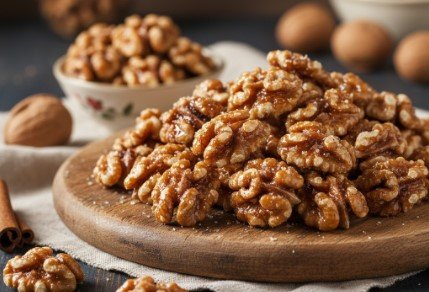
Candied walnuts are walnuts coated in a lightly caramelized sugar or honey mixture that forms a shiny, crisp shell. Their growing popularity comes from their ability to elevate both sweet and savory dishes while still offering many of the natural nutritional benefits found in regular walnuts.
History and Origin of Candied Walnuts
The history of candied walnuts can be traced back several centuries to early European and Middle Eastern kitchens, where nuts were often preserved using honey or boiled sugar syrups. Ancient recipes show that coating nuts in sweetness made them easier to store and transport while adding flavor. Over time, candied nuts became a part of holiday feasts, street markets, and royal desserts. As food traditions traveled, the technique evolved, and the modern version of candied walnuts we enjoy today became a staple in baking, snacking, and gourmet cooking.
What Candied Walnuts Are Made Of
Traditional candied walnuts require only a handful of simple ingredients: fresh walnuts, granulated sugar or honey, water, and occasionally cinnamon, vanilla, salt, or brown sugar. The walnuts are heated with the sweetener until a glossy caramel layer forms around each piece. This simplicity makes them accessible to home cooks and allows endless variations in texture and flavor.
Nutritional Profile of Candied Walnuts
Although candied walnuts contain added sweetness, their foundation — whole walnuts — is naturally rich in nutrients. A serving of candied walnuts includes healthy fats, plant-based protein, fiber, magnesium, copper, and vitamin E. Walnuts are especially known for their omega-3 fatty acids, which support heart and brain function. However, due to the sugar coating, candied walnuts contain additional calories and carbohydrates, making portion control important for a balanced diet. When consumed mindfully, they offer both nutritional value and enjoyable flavor.
Health Benefits of Walnuts Before Candying
Before the candying process, walnuts are among the healthiest nuts available. They are packed with antioxidants, anti-inflammatory compounds, and essential omega-3s beneficial for cognitive function. Studies highlight walnuts’ ability to support heart health by lowering bad cholesterol and improving circulation. Their natural combination of protein and fiber may also support appetite control and steady energy release. These properties remain present — though slightly reduced — even after walnuts are coated in a light candy shell.
Also Read This:- The Rivenisnet Blog: A Complete Guide to Mastering Digital Publishing
Health Considerations of Candied Walnuts
Even though candied walnuts offer a satisfying and nutritious snack, they do include added sugars that may influence overall calorie intake. Those monitoring blood sugar or practicing a low-sugar diet should enjoy them in moderation. A small handful is typically enough to enjoy the flavor while keeping dietary balance. Choosing honey-sweetened or lightly candied versions can offer a healthier alternative. Using them as toppings on salads, yogurt, or fruit bowls spreads out the sweetness and adds nutritional texture without overindulging.
Age of Candied Walnuts: A Fun Biographical Look
Thinking of candied walnuts as having a “biography” brings a fun perspective to their culinary evolution. Historically speaking, candied walnuts are “middle-aged,” with anywhere from 300 to 500 years of cultural presence. Their life began when cooks discovered that coating walnuts in honey or sugar extended shelf life and added festive flavor. Over centuries, they traveled across continents and kitchens, becoming a beloved treat in celebrations, bakeries, and home cooking. Today, they continue to evolve with modern diets, from traditional caramel coatings to sugar-free and spiced variations.
Candied Walnuts and Their Food Relationships
One of the most enjoyable aspects of candied walnuts is their ability to pair effortlessly with many different foods. In salads, they add texture and sweetness that balance leafy greens and tangy dressings. With fruits like apples, pears, or cranberries, they create a naturally sweet combination perfect for breakfast bowls or light snacks. In desserts, candied walnuts elevate brownies, cakes, cookies, and ice cream toppings. Their relationship with cheeses — particularly feta, goat cheese, and blue cheese — brings a delightful contrast that is both savory and sweet. This versatility makes candied walnuts a powerful ingredient in home kitchens and restaurant menus alike.
Variations of Candied Walnuts
There are many creative variations of candied walnuts, each offering a unique twist on the classic recipe. Some versions use honey for a more natural sweetness, while others introduce warm spices like cinnamon, nutmeg, or pumpkin spice to enhance flavor. A growing trend includes sugar-free or keto-friendly options that rely on low-calorie sweeteners. Spicy candied walnuts, coated with cayenne or chili powder, offer a bold contrast of heat and sweetness. These variations allow consumers to align the flavor profile with dietary goals and personal preference.
Also Read This:- air quality monitor: All About Indoor and Outdoor Air Tracking
How to Make Candied Walnuts at Home
Preparing candied walnuts at home is simple and requires minimal time. Start by toasting fresh walnuts lightly in a pan to enhance their natural flavor. In a separate pan, combine sugar or honey with a splash of water or butter and heat until it forms a thick syrup. Stir in the walnuts until fully coated and continue cooking until the mixture caramelizes. Spread the walnuts on parchment paper to cool and harden. To make a healthier version, use less sugar, choose honey, or add spices instead of extra sweetener. Homemade candied walnuts often taste fresher and allow complete control over the ingredients.
Best Ways to Store Candied Walnuts
Storing candied walnuts properly ensures they stay crunchy and flavorful. Once cooled, they should be placed in an airtight glass or plastic container to prevent moisture absorption. When stored at room temperature, they remain fresh for one to three weeks. For longer storage, refrigerating or freezing them helps retain flavor and texture. Avoid humid environments, as moisture can soften the candy coating and reduce crispness.
Conclusion: Are Candied Walnuts a Healthy Choice?
Candied walnuts can absolutely be part of a healthy lifestyle when consumed mindfully. Their base — walnuts — provides essential nutrients, heart-friendly fats, and antioxidants. The candy coating adds sweetness, so moderation is key, but pairing them with balanced meals like salads or yogurt helps maintain dietary control. Their delightful taste, versatility, and nutritional benefits make candied walnuts a smart choice for those who want to enjoy wholesome treats without sacrificing flavor.
FAQs
What are candied walnuts made of?
Usually walnuts coated in a caramelized mixture of sugar, honey, or spices.
Are candied walnuts healthy to eat?
Yes, in moderation; they contain healthy fats and nutrients from walnuts.
Can I make candied walnuts without sugar?
Yes, honey, maple syrup, or sugar alternatives can be used.
How long do homemade candied walnuts last?
They typically last up to three weeks in an airtight container.
Do candied walnuts go well with salads?
Yes, they pair wonderfully with greens, fruits, and cheeses.
For More Update and Stories Visit: greenpress
