


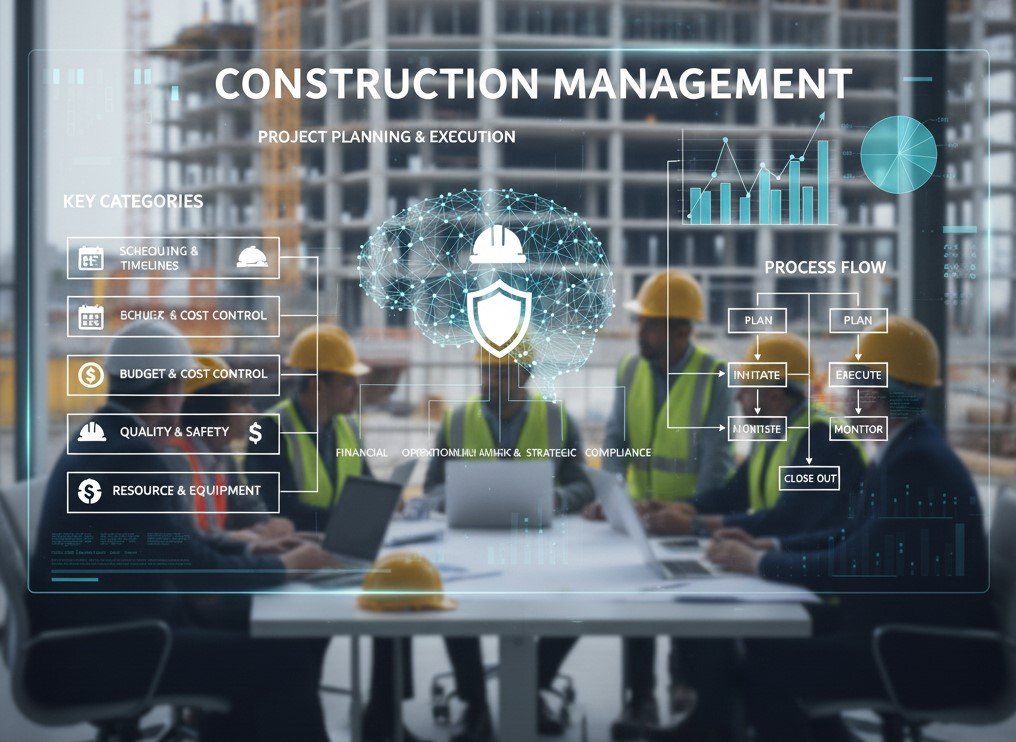
Construction Management plays a crucial role in shaping how buildings, infrastructure, and development projects come to life From planning and coordination to execution and final delivery, construction management ensures that complex projects run efficiently, safely, and within budget Whether managing a residential build or a large commercial project, the construction manager serves as the guiding force behind successful completion.
Background & Origins of Construction Management
The roots of Construction Management trace back to early civilizations where large-scale structures such as pyramids, temples, and roads required organized planning. Though the role was not formally defined, early leaders played responsibilities similar to today’s construction managers—coordinating labor, sourcing materials, and directing the build
Over time, as construction projects became more complex and specialized, the need for structured management grew By the 20th century, construction management became a recognized professional field, supported by technical education, industry standards, and modern project management practices.
History & “Age” of Construction Management as a Profession
The evolution of Construction Management can be viewed in stages.
Early 1900s: Large industrial projects created a demand for organized oversight.
1950s–1970s: Construction firms adopted formal project management frameworks.
1980s–2000s: The rise of technology changed documentation, scheduling, and design coordination.
Modern era: Digital tools, automation, cloud platforms, and BIM transformed how construction managers plan and manage projects.
Today, construction management is a well-established, essential component of the global building industry.
Also Read This:- Leomorg: Revolutionizing Modern Business with Technology, Intelligence, and Innovation
“Physical Appearance” of Construction Management Roles
The “appearance” of Construction Management includes the responsibilities, tools, and environments tied to the role A typical construction manager splits time between office settings and active construction sites. Their daily routine may include:
- Conducting onsite inspections
- Meeting with architects, engineers, and contractors
- Reviewing schedules, budgets, and progress
- Creating reports and coordinating next steps
- Managing documentation and compliance requirements
Construction managers use tools such as laptops, tablets, walkie-talkies, blueprints, and digital platforms to stay organized and informed throughout each project phase.
Core Skills & Qualities in Construction Management
Successful Construction Management relies on a combination of technical expertise and strong leadership qualities Important skills include:
- Leadership: Guiding teams and making timely decisions
- Communication: Coordinating clearly with multiple stakeholders
- Planning: Mapping out project timelines and resource needs
- Budget management: Tracking spending and preventing overruns
- Problem-solving: Addressing unexpected issues on site
- Risk assessment: Identifying hazards before they affect progress
These skills help construction managers maintain control over fast-moving and complex projects.
Types of Construction Management
Construction management applies to many different sectors Common types include:
- Residential construction management – homes, apartments, small developments
- Commercial construction management – offices, retail centers, hotels
- Industrial construction management – factories, warehouses, energy facilities
- Infrastructure construction management – roads, bridges, rail systems
- Specialized construction – healthcare facilities, educational buildings, environmental projects
Each type requires industry-specific knowledge, but all share the principles of planning, coordination, and project oversight.
Relationship With Architects, Engineers & Contractors
A strong working relationship between Construction Management professionals and design experts is essential Construction managers collaborate closely with:
- Architects to understand design intent
- Engineers to coordinate structural, mechanical, and electrical systems
- Contractors and subcontractors to execute work correctly and safely
This cooperation ensures that design plans are practical, efficient, and implemented accurately on-site.
Relationship With Project Owners & Stakeholders
Construction managers also maintain communication with project owners and stakeholders. They provide updates, share reports, and ensure expectations align with real-time project conditions.
This relationship involves:
- Transparent reporting
- Budget tracking
- Timeline updates
- Approvals for key decisions
By keeping owners informed, construction managers help prevent misunderstandings and keep the project moving smoothly.
Also Read This:- Foxtpax Software: Secure File Transfers and Workflow Automation for Modern Businesses
Construction Management Process & Lifecycle
The lifecycle of Construction Management follows a structured sequence:
Pre-construction
This stage involves planning, budgeting, site analysis, and selecting contractors.
Design coordination
Construction managers work with architects and engineers to finalize plans and identify potential conflicts early.
Site execution
During the construction phase, managers oversee day-to-day operations, coordinate teams, ensure safety, and track progress.
Inspections
Quality checks, safety evaluations, and compliance reviews ensure the project meets industry standards.
Project closeout
At completion, documentation is finalized, punch lists are addressed, and the project is handed over to the owner.
This lifecycle ensures organization and accountability across every step of the build.
Tools, Technology & Software in Construction Management
Modern Construction Management relies heavily on technology to improve communication and efficiency. Common tools include:
- Project management platforms for schedules and documentation
- BIM (Building Information Modeling) for 3D design coordination
- Scheduling software such as Gantt charts
- Cloud storage for accessible, centralized documents
- Digital inspection tools for real-time updates
These systems help teams stay aligned, reduce errors, and speed up project delivery.
Challenges Faced in Construction Management
Construction managers frequently navigate challenges such as:
- Budget constraints caused by material price changes
- Project delays due to weather or supply issues
- Labor shortages affecting timelines
- Safety risks on active job sites
- Regulatory requirements varying by region
- Unexpected site conditions such as soil issues or hidden structural problems
Effectively handling challenges is a key part of the construction manager’s role.
Real-World Examples of Construction Management in Action
Examples of Construction Management can be seen in:
- A residential home build requiring coordination between carpenters, electricians, and inspectors
- A commercial office tower where multiple subcontractors operate simultaneously
- Infrastructure projects like roads or bridges demanding strict timelines and safety measures
- Industrial facilities needing specialized systems and engineering oversight
These scenarios highlight the wide range of responsibilities involved in construction management.
Career Path & Future of Construction Management
The future of Construction Management is shaped by technology, sustainability, and workforce trends.
Career paths often include:
- Construction manager
- Project engineer
- Site supervisor
- Project coordinator
- Senior project manager
Emerging trends include:
- Increased use of AI for scheduling and risk forecasting
- Automation in site monitoring
- Sustainable building practices
- Advanced BIM systems
- Digital twins for monitoring project conditions
As the construction industry continues to evolve, the role of the construction manager becomes even more essential.
Conclusion
Construction Management is the backbone of successful building projects It blends leadership, technical planning, communication, and problem-solving to guide projects from concept to completion Whether used in residential developments or major infrastructure projects, construction management ensures that every phase is executed safely, efficiently, and professionally As new technology and methods emerge, construction managers will continue to adapt—playing a vital role in shaping the structures and systems that support modern life.
Frequently Asked Questions
What is construction management?
It is the process of planning, coordinating, and controlling a construction project from start to finish
What does a construction manager do?
They oversee scheduling, budgeting, communication, site supervision, and safety management
Is construction management only for large projects?
No, it applies to residential builds, small developments, and major commercial or infrastructure projects
What skills are required in construction management?
Leadership, planning, budgeting, communication, and problem-solving
What tools do construction managers use?
Project management software, BIM tools, schedules, reports, and digital tracking systems
How does construction management improve project success?
It ensures organization, reduces mistakes, maintains budgets, and keeps timelines on track
Is construction management a growing field?
Yes, demand is increasing due to expanding building needs and new technologies
Do construction managers work on-site?
They split time between office tasks and active construction sites
What challenges do construction managers face?
Delays, budget limits, labor issues, material shortages, and safety concerns
Can technology improve construction management?
Yes, digital tools like BIM and AI significantly enhance coordination and accuracy
For More Update and Stories Visit: greenpress
