


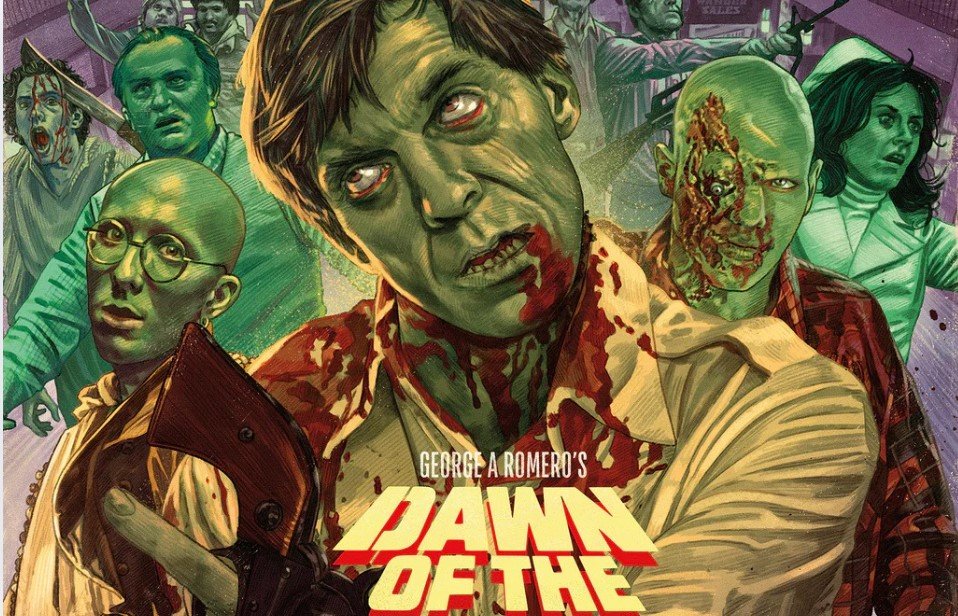
The 1978 Dawn of the Dead movie, directed by George A. Romero, is more than just a horror film—it is a cultural landmark that redefined the zombie genre and elevated the horror landscape with its biting social commentary and visceral impact. Released a decade after Romero’s groundbreaking Night of the Living Dead (1968), Dawn of the Dead took the mythos of the undead to new heights, blending suspenseful survival storytelling with a deep reflection on consumerism, society, and human nature.
Set during a rapidly spreading zombie apocalypse, the film follows four survivors—two SWAT team members, a TV traffic reporter, and his producer girlfriend—as they take shelter inside a massive shopping mall. What begins as a refuge from the undead soon becomes a psychological exploration of survival, fear, and the collapse of social order.
This in-depth article explores the 1978 Dawn of the Dead movie from every angle—its themes, production, impact, and legacy—and why it remains one of the most influential horror films ever made.
A Synopsis of Dawn of the Dead (1978)
The movie opens in chaos. Society is unraveling as the zombie plague spreads unchecked. Panic grips the streets of Philadelphia. Stephen Andrews, a helicopter traffic reporter, and his girlfriend Francine Parker, a television station executive, plan to flee the city. They are joined by Roger and Peter, two SWAT officers who have just survived a brutal police raid where the undead emerge as the new threat.
Together, the four escape in a helicopter and find refuge in a seemingly abandoned suburban shopping mall. Initially, the mall is seen as a haven—a safe, secure, and resource-rich environment where they can survive. The survivors work together to secure the entrances, kill the zombies inside, and fortify their new sanctuary.
But the illusion of safety begins to fade. As time passes, isolation, boredom, and the weight of the outside world begin to affect them psychologically. Eventually, their mall sanctuary is breached—not by zombies alone, but by a group of violent bikers. Chaos ensues as the undead and the living collide in a brutal finale, exposing the fragility of order and the cost of survival.
Behind the Scenes: The Making of a Horror Milestone
Directed and written by George A. Romero, Dawn of the Dead was produced independently with a relatively modest budget. Romero partnered with Italian horror maestro Dario Argento, who helped finance the project in exchange for international distribution rights. This collaboration also influenced the film’s European cut and its unique soundtrack by the Italian progressive rock band Goblin.
Filming took place at the Monroeville Mall in Pennsylvania, a real shopping mall that gave the movie its iconic setting. Shooting primarily took place at night to avoid interference with daily shoppers. The setting became one of the film’s most memorable elements, adding realism and eerie familiarity to the horror.
Special effects were spearheaded by Tom Savini, who introduced innovative makeup techniques and gruesome practical effects that were groundbreaking for the time. His work not only shocked audiences but set new standards for gore in horror cinema.
Romero’s decision to blend visceral horror with satirical commentary marked a significant evolution in his approach to zombie storytelling. Unlike Night of the Living Dead, which focused more on racial tension and claustrophobia, Dawn was broader in scale and ambition, using the shopping mall as a metaphor for capitalism, consumption, and modern society.
Casting and Performances
The film stars relatively unknown actors at the time, which added to its realism and believability:
- David Emge as Stephen “Flyboy” Andrews: A TV traffic pilot whose survival skills are tested throughout.
- Ken Foree as Peter Washington: A calm and capable SWAT officer who emerges as the group’s de facto leader.
- Scott H. Reiniger as Roger DeMarco: Peter’s SWAT partner, whose optimism is slowly eroded by the horrors around them.
- Gaylen Ross as Francine Parker: A strong, resourceful woman who refuses to be a passive participant in the group’s survival.
The cast’s grounded performances help the audience connect emotionally with the characters. Gaylen Ross’s portrayal of Francine was especially significant at the time, as her character breaks away from typical female horror tropes by being intelligent, proactive, and independent.
Also Read This:- Spectre Divide Player Count: A Complete Analysis of Trends, Decline, and Future Prospects
Themes and Social Commentary
Consumerism and the Rise of Mall Culture
Perhaps the most discussed element of the 1978 Dawn of the Dead movie is its critique of consumerism. The mall, a symbol of American capitalism, becomes both a paradise and a prison. The survivors indulge in luxury, wearing fine clothes and enjoying the illusion of normalcy, but the hollowness of material wealth is laid bare.
The zombies themselves are drawn to the mall by instinct, mimicking their past lives. As one character observes, “They’re after the place. They don’t know why. They just remember.” This eerie portrayal of the undead as consumers mindlessly wandering the aisles becomes a haunting metaphor for modern society.
Breakdown of Social Order
As the story progresses, the collapse of society outside the mall mirrors the psychological deterioration inside. The characters’ initial cooperation turns into apathy and detachment. When the biker gang invades, it symbolizes how, even amid a global catastrophe, human greed and aggression persist.
The failure of societal structures—police, government, media—is evident from the start. By taking refuge in the mall, the characters attempt to create their own version of civilization, but without shared purpose or moral compass, their world begins to crumble.
Survival vs. Humanity
Romero’s script poses an ongoing question: at what cost do we survive? The characters are forced to make brutal choices, but the film never glamorizes violence. It shows the psychological toll of killing, the numbing effects of prolonged fear, and the struggle to retain one’s identity in a world that no longer makes sense.
Cinematography and Editing
Romero’s direction is tight and focused. He employs wide-angle shots to capture the emptiness of the mall and claustrophobic close-ups to heighten tension. The pacing is deliberate, alternating between intense action and slow, haunting scenes of reflection.
The editing, also handled by Romero, is lean but effective. Action scenes are cut quickly to emphasize chaos, while quieter moments are given time to breathe, allowing audiences to absorb the emotional weight of the story.
Music and Soundtrack
The film’s soundtrack is a fusion of stock library music and original compositions by Goblin. The eerie, sometimes whimsical score contrasts sharply with the brutal imagery, enhancing the film’s surreal quality.
Goblin’s progressive rock score gives the European cut of the film a different tone, one that emphasizes dread and suspense. In contrast, the U.S. version’s mix of library music provides a more chaotic, newsreel-like atmosphere.
Censorship and Controversy
Due to its graphic violence and gore, Dawn of the Dead was released unrated in the U.S., which meant it avoided the restrictive X rating but also limited its theater distribution. Despite this, the film was a commercial success, earning over $55 million worldwide against a budget of around $1.5 million.
Many countries imposed bans or required significant cuts. In some places, the film was only available through underground or home video releases. Over time, however, critics and academics began to recognize its artistic and cultural value.
Critical Reception and Legacy
Initially, reviews were mixed. Some critics praised its innovation and message, while others were repulsed by the gore. Over time, however, the 1978 Dawn of the Dead movie gained cult status and critical acclaim.
Today, the film is considered one of the greatest horror films ever made. It has inspired countless filmmakers, including Quentin Tarantino, Edgar Wright, and Zack Snyder, who directed a 2004 remake.
The original remains notable not just for its scares but for its intelligence. It has been studied in film schools, featured in retrospectives, and regularly appears on “greatest horror movie” lists.
Influence on the Zombie Genre
Romero’s vision reshaped zombies from mindless ghouls into reflections of societal fears. The zombies in Dawn of the Dead are not just monsters—they’re tragic echoes of humanity. This emotional complexity influenced later works such as:
- 28 Days Later (2002)
- The Walking Dead series
- Shaun of the Dead (2004)
- Train to Busan (2016)
The modern zombie genre, now a global phenomenon, owes much of its thematic and visual language to Dawn of the Dead.
Also Read This:- Car With Two Driving Wheels: A Deep Dive Into Dual Steering Innovation
Different Versions and Cuts
Several versions of the film exist:
- Theatrical Cut (U.S.) – Edited by Romero, focusing more on character development.
- European Cut – Edited by Dario Argento, with more action and a different musical score.
- Extended Cut (Cannes version) – Includes extra scenes and character moments.
Each version offers a slightly different perspective on the same story, contributing to the film’s enduring fascination among fans and scholars.
Collectability and Home Media
Due to rights issues, Dawn of the Dead was hard to find on streaming platforms for many years. However, it has been released multiple times on DVD, Blu-ray, and most recently in 4K Ultra HD with restored footage and bonus content.
Collectors regard it as a prized possession, especially limited-edition releases featuring different cuts and behind-the-scenes documentaries.
Conclusion
The 1978 Dawn of the Dead movie remains a towering achievement in horror cinema. With its masterful blend of social commentary, compelling characters, and groundbreaking special effects, it continues to resonate with audiences nearly half a century after its release.
George A. Romero didn’t just make a zombie movie—he created a mirror reflecting society’s darkest impulses and anxieties. In a world that still grapples with pandemics, consumerism, and social unrest, Dawn of the Dead feels more relevant than ever.
Whether you’re a longtime horror fan or a newcomer exploring the roots of the genre, Dawn of the Dead is essential viewing.
FAQs About the 1978 Dawn of the Dead Movie
Is Dawn of the Dead (1978) connected to Night of the Living Dead?
Yes, both are part of George A. Romero’s “Dead” series. While not direct sequels, they share the same universe and thematic elements.
Where was Dawn of the Dead filmed?
Most of the film was shot at Monroeville Mall in Pennsylvania and surrounding areas near Pittsburgh.
Why was the film released unrated?
Romero chose to release it unrated to avoid an X rating due to its graphic content, which would have restricted its audience even further.
What’s the difference between the U.S. and European versions?
The European cut, edited by Dario Argento, has more action and a different score. The U.S. version emphasizes character development and has a more documentary-style feel.
How has the film influenced modern horror?
Dawn of the Dead set the standard for zombie films and inspired modern classics like The Walking Dead, Shaun of the Dead, and 28 Days Later.
For More Update and Stories Visit: greenpress
