


If you’ve ever imagined what it would be like to drive a car with two driving wheels, you’re not alone. Thanks to a creative and slightly outrageous build by Master Milo on YouTube, we now have a real-life example of this concept brought to life through an eccentric yet functional dual-steering Opel Corsa. But this isn’t just a viral YouTube stunt — it’s a fascinating mechanical feat that pushes the boundaries of vehicle control and teamwork.
In this article, we explore everything there is to know about cars with two driving wheels — and more specifically, vehicles with dual steering control. We’ll examine how such builds work, the engineering behind them, their practical (or impractical) uses, and how this concept taps into core automotive design principles.
What Does “Car With Two Driving Wheels” Really Mean?
At its core, a “car with two driving wheels” typically refers to a vehicle that delivers power to two of its wheels. In conventional terms, this usually means either front-wheel drive (FWD) or rear-wheel drive (RWD). However, the story becomes much more intriguing when we’re talking about a car where two separate people can drive or steer the vehicle — each controlling a different wheel independently.
In the case of the Opel Corsa with dual steering, this concept is taken to an extreme. Instead of shared control of the vehicle, the steering responsibility is split down the middle: the driver on the left controls the left front wheel, and the passenger on the right manages the right front wheel. The result is a symphony of (sometimes clashing) teamwork, requiring both participants to steer in harmony — or chaos.
This is not just a quirky concept — it raises questions about balance, synchronization, and trust behind the wheel. Before we dive into how this was built, let’s look at some engineering context.
The Mechanical Madness: How a Car With Two Steering Wheels Works
Modifying the Steering System
To build a car with two independent steering wheels, you need to completely reimagine the steering rack — the mechanism that usually allows both wheels to turn in tandem from a single input. In Master Milo’s build:
- The original steering rack was removed and dissected.
- It was then split and customized so that each front wheel could turn independently.
- A new steering linkage was installed for the passenger side, including a second steering wheel mounted in the usual glovebox area.
This modification is not just complex but also demands precision. Any mismatch between linkages could result in unwanted friction, delayed steering responses, or even catastrophic failure. The setup requires synchronous movement, especially if both individuals intend to steer in the same direction.
Handling and Driveability
From an engineering perspective, this dual setup is problematic in traditional terms. Standard vehicles rely on Ackermann steering geometry, which ensures that wheels turn at different angles during a turn to avoid tire scrubbing. With two separate steering systems, that careful geometry goes out the window.
Some challenges observed in the build include:
- Steering feedback inconsistency: With only one tire turning, getting a feel for the road becomes difficult.
- Uneven steering ratios: The left and right wheels may not turn at equal rates, depending on the input strength or angle.
- Coordination: Requires both parties to communicate and respond to road conditions together.
Despite all this, the Opel Corsa manages surprisingly well during the test drives — even when both participants try to steer in opposite directions. It’s chaotic, but it works.
Also Read This:- Preseason Takeaways: What We Learned from Manchester United’s 2024/25 Preparations
Why Build a Car With Two Steering Wheels?
The obvious answer: entertainment. But there are deeper insights into this kind of build.
Trust and Coordination: The Human Factor
A car with two driving wheels controlled by different people is the ultimate test of teamwork and trust. Think about it:
- Couples often argue over driving decisions.
- Now imagine each partner has control over one front wheel.
- Will they communicate and steer smoothly, or end up in a ditch?
This isn’t just a test of mechanical engineering — it’s a test of human psychology. Dual control forces occupants to think together, act together, and literally steer their way through challenges, one wheel at a time.
A Thought Experiment in Design
For automotive engineers, this setup is a great thought experiment. It questions the basic premise of car control systems:
- Can control be safely distributed?
- What happens when synchronization fails?
- Could future cars benefit from distributed inputs (e.g., self-driving AI + human override)?
Although not practical, builds like this help engineers and enthusiasts think outside the box — or outside the car chassis, in this case.
Real-World Applications: Are Dual Steering Systems Ever Used?
While Master Milo’s project is firmly in the realm of experimental engineering, dual steering controls do exist in some real-world scenarios.
Driver Training Vehicles
Many driving schools use vehicles with dual controls:
- The instructor has a secondary brake and sometimes steering input.
- This setup ensures safety while giving new drivers a hands-on experience.
However, this system still maintains primary control hierarchy, where the instructor’s input can override the student’s.
Research and Autonomous Development
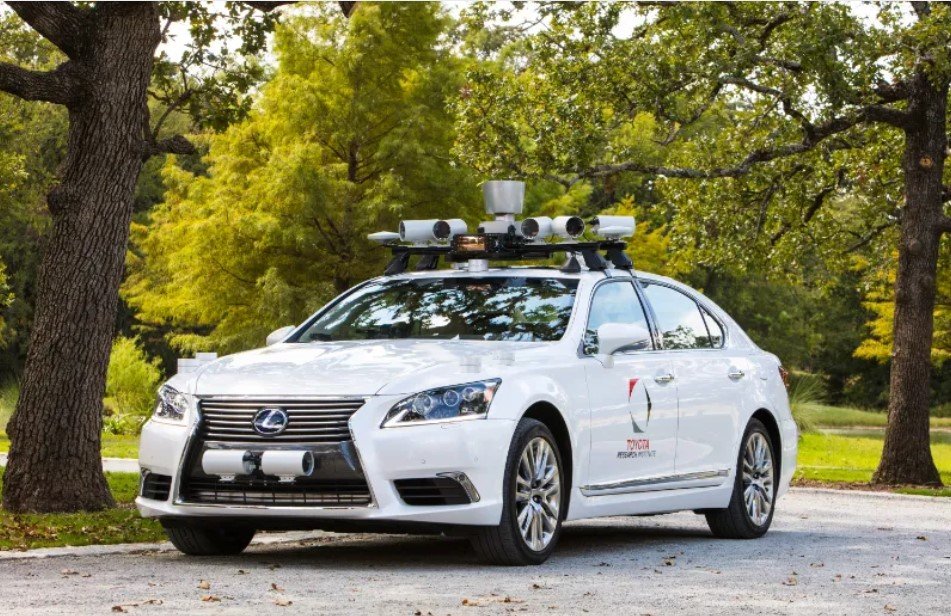
In autonomous vehicle research, test cars are sometimes fitted with dual control systems:
- One system is for the AI/autonomous software.
- Another is for the human driver or engineer.
This redundancy ensures safety and allows engineers to test autonomous systems in real conditions without fully relinquishing control.
Also Read This:- TurboGeekOrg: A Premier Destination for Technology Enthusiasts and Professionals
Understanding the Dynamics of Two-Wheel Steering
To truly grasp how a car with dual steering operates, let’s compare it with more traditional configurations:
| Drive Configuration | Description | Example Vehicles |
|---|---|---|
| Front-Wheel Drive (FWD) | Power sent to front two wheels | Honda Civic, Toyota Corolla |
| Rear-Wheel Drive (RWD) | Power sent to rear two wheels | BMW 3-Series, Ford Mustang |
| All-Wheel Drive (AWD) | Power to all four wheels | Subaru Outback, Audi Quattro |
| Two Independent Steering Wheels | Each front wheel steered by different person | Master Milo’s Opel Corsa |
While FWD and RWD setups are optimized for stability, control, and traction, dual-steering is optimized for… chaos? Perhaps more accurately: experimentation and entertainment.
Master Milo’s Dual Steering Opel Corsa: The Internet Reacts
The video documenting this build has become a viral hit for a reason. Some highlights include:
- The Build Process: Shown in detail, the dissection and reconfiguration of the steering rack is equal parts genius and madness.
- Test Drive Mayhem: With both participants attempting to steer, coordination goes from comedy to catastrophe.
- Surprising Success: Despite the odd setup, the car is driveable, and in moments, genuinely functional.
Could Dual Steering Ever Become Mainstream?
Unlikely — at least in its current form. But the concept of collaborative control may not be far-fetched. Consider these possibilities:
- Shared control between human and AI in autonomous vehicles
- Remote driving systems where operators manage different functions
- Multiplayer driving simulators for training or entertainment
As automotive technology continues to evolve, we might see more “non-traditional” control systems. Though we probably won’t get a dual-steering Corsa at the dealership any time soon, the lessons from this build could influence future designs.
Conclusion: When Engineering Meets Imagination
The Opel Corsa with two driving wheels — or more accurately, two independently steered front wheels — is a brilliant, hilarious, and thought-provoking build. While it might seem like nothing more than a novelty at first glance, it demonstrates creative engineering, mechanical understanding, and the power of collaboration under pressure.
Whether you’re an auto enthusiast, an engineer, or just someone who’s ever argued about directions in a car, this project has something for you. It reminds us that the best innovations often start with asking, “What if?” — even if the answer is completely impractical.
FAQs
Is it safe to drive a car with two separate steering wheels?
No, not under normal conditions. The lack of synchronized control introduces major safety risks and is not road-legal.
Why did Master Milo build this car?
For entertainment, education, and to push the boundaries of what’s mechanically possible in a fun way.
Do real cars ever have two steering wheels?
Yes, in certain training vehicles or prototypes, but they’re designed with a control hierarchy — unlike Milo’s equal input setup.
Can I build one myself?
You could, but it requires advanced knowledge of steering systems, fabrication skills, and it would be strictly for off-road or private use.
For More Update and Stories Visit: greenpress
